
 Image 1 of 1
The La Bastilla farm in Nicaragua has it’s own micro mill and is known for producing exceptional coffees including experimental processes. This is a naturally processed Gesha that is very fruit forward. Finca La Bastilla produces up to 150 micro-lots per year. The estate is made up of multiple micro-farms, each with their own micro-climates. Delicate varieties like this gesha are grown at higher elevations to take advantage of the colder temperatures.
La Bastilla started experimenting with anaerobic coffee three years ago after purchasing four stainless steel tanks equipped with temperature control and valves to pull out mucilage samples. As microorganisms metabolize the sugars in the coffee cherries, oxygen is depleted from the tanks, and they enter an anaerobic state. The microorganisms produce distinct acids, like lactic acid, that influence the flavor profile of the coffee. This meticulous process requires monitoring the temperature and pH level of the tank. Mucilage samples are taken throughout the process and checked for quality and consistency. The anaerobic fermentation process, in conjunction with careful quality sorting and stellar agronomy practices, can lead to a complex and desirable cup profile.
Gesha coffee beans are a variety of Arabica coffee. It’s also one of the most expensive varieties of coffee in the world, valued for its distinct floral and tea-like flavor character. Gesha trees have low yields and can be difficult to cultivate which adds to their scarcity on the market.
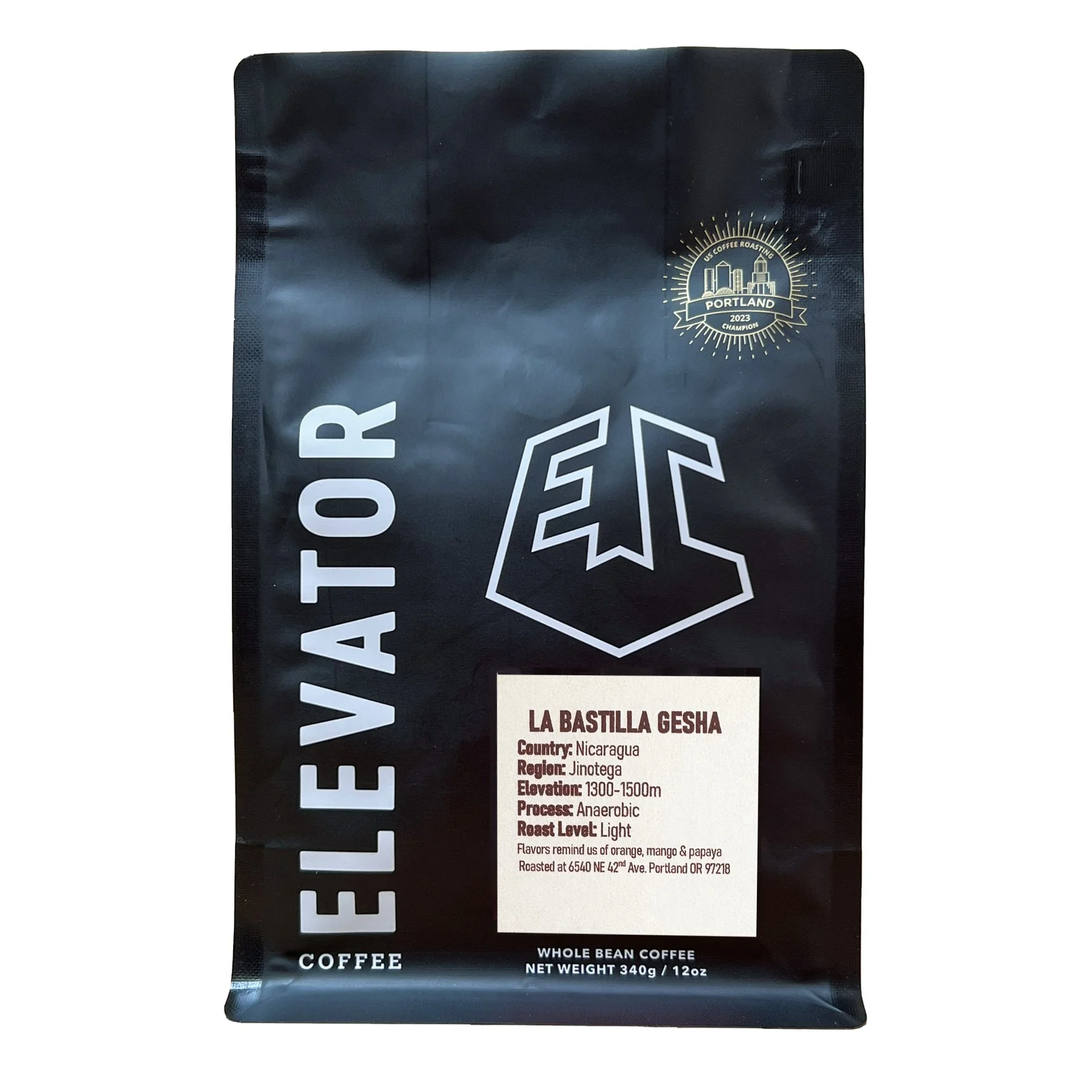
Flavors remind us of orange, mango, papaya
Region: Jinotega
Elevation: 1300-1500 meters
Variety: Gesha
Processing: Anaerobic
Roast Level: Light
The La Bastilla farm in Nicaragua has it’s own micro mill and is known for producing exceptional coffees including experimental processes. This is a naturally processed Gesha that is very fruit forward. Finca La Bastilla produces up to 150 micro-lots per year. The estate is made up of multiple micro-farms, each with their own micro-climates. Delicate varieties like this gesha are grown at higher elevations to take advantage of the colder temperatures.
La Bastilla started experimenting with anaerobic coffee three years ago after purchasing four stainless steel tanks equipped with temperature control and valves to pull out mucilage samples. As microorganisms metabolize the sugars in the coffee cherries, oxygen is depleted from the tanks, and they enter an anaerobic state. The microorganisms produce distinct acids, like lactic acid, that influence the flavor profile of the coffee. This meticulous process requires monitoring the temperature and pH level of the tank. Mucilage samples are taken throughout the process and checked for quality and consistency. The anaerobic fermentation process, in conjunction with careful quality sorting and stellar agronomy practices, can lead to a complex and desirable cup profile.
Gesha coffee beans are a variety of Arabica coffee. It’s also one of the most expensive varieties of coffee in the world, valued for its distinct floral and tea-like flavor character. Gesha trees have low yields and can be difficult to cultivate which adds to their scarcity on the market.
Flavors remind us of orange, mango, papaya
Region: Jinotega
Elevation: 1300-1500 meters
Variety: Gesha
Processing: Anaerobic
Roast Level: Light


