 Image 1 of 1
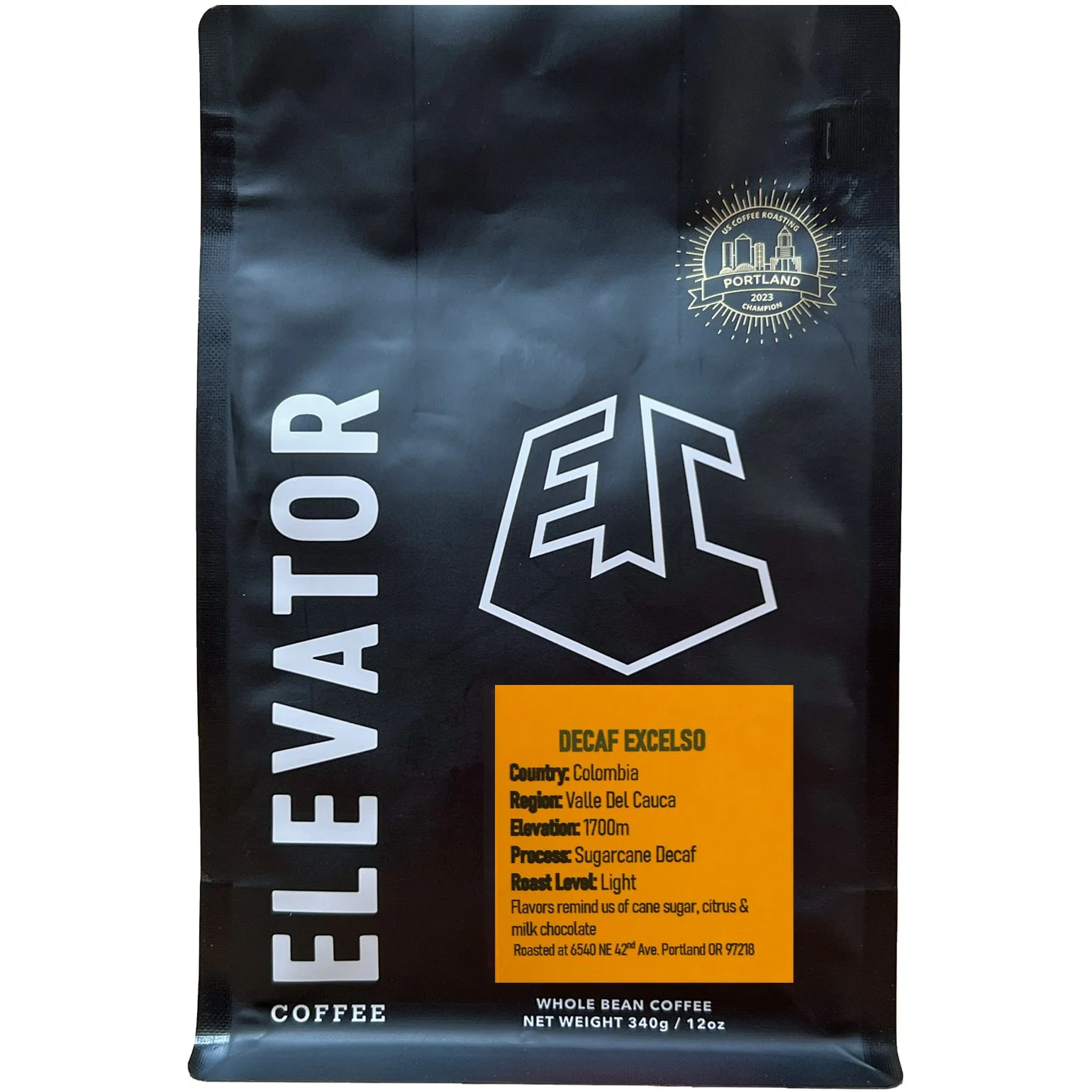
This decaf comes to us by way of Huila, Colombia from our friends at La Minita.
Once purchased, individual parchment lots are dry-milled at Valle de Cauca and then quickly sent to Manizales, Colombia for decaffeination using the sugarcane process (also called EA process). First, sugarcane molasses is fermented to create ethanol, which is then mixed with acetic acid to create ethyl acetate (EA). The coffee is steamed, opening its pores to enhance extraction of caffeine molecules. From there, the beans are placed into an EA solution, which bonds to caffeine inside the beans. The solution is drained and refilled until 97% or more of the caffeine is removed. Sugarcane is widely available in Colombia, and the decaffeination plant—Descafecol—gets theirs from farms in the town of Palmira in the Valle del Cauca Department, west of Huila.
Flavors remind us of: cane sugar, citrus, milk chocolate
Country: Colombia
Growing region: Huila
Elevation: 1700masl
Processing: Sugarcane decaf
Roast Level: Light
This decaf comes to us by way of Huila, Colombia from our friends at La Minita.
Once purchased, individual parchment lots are dry-milled at Valle de Cauca and then quickly sent to Manizales, Colombia for decaffeination using the sugarcane process (also called EA process). First, sugarcane molasses is fermented to create ethanol, which is then mixed with acetic acid to create ethyl acetate (EA). The coffee is steamed, opening its pores to enhance extraction of caffeine molecules. From there, the beans are placed into an EA solution, which bonds to caffeine inside the beans. The solution is drained and refilled until 97% or more of the caffeine is removed. Sugarcane is widely available in Colombia, and the decaffeination plant—Descafecol—gets theirs from farms in the town of Palmira in the Valle del Cauca Department, west of Huila.
Flavors remind us of: cane sugar, citrus, milk chocolate
Country: Colombia
Growing region: Huila
Elevation: 1700masl
Processing: Sugarcane decaf
Roast Level: Light